Viennese Biscuits
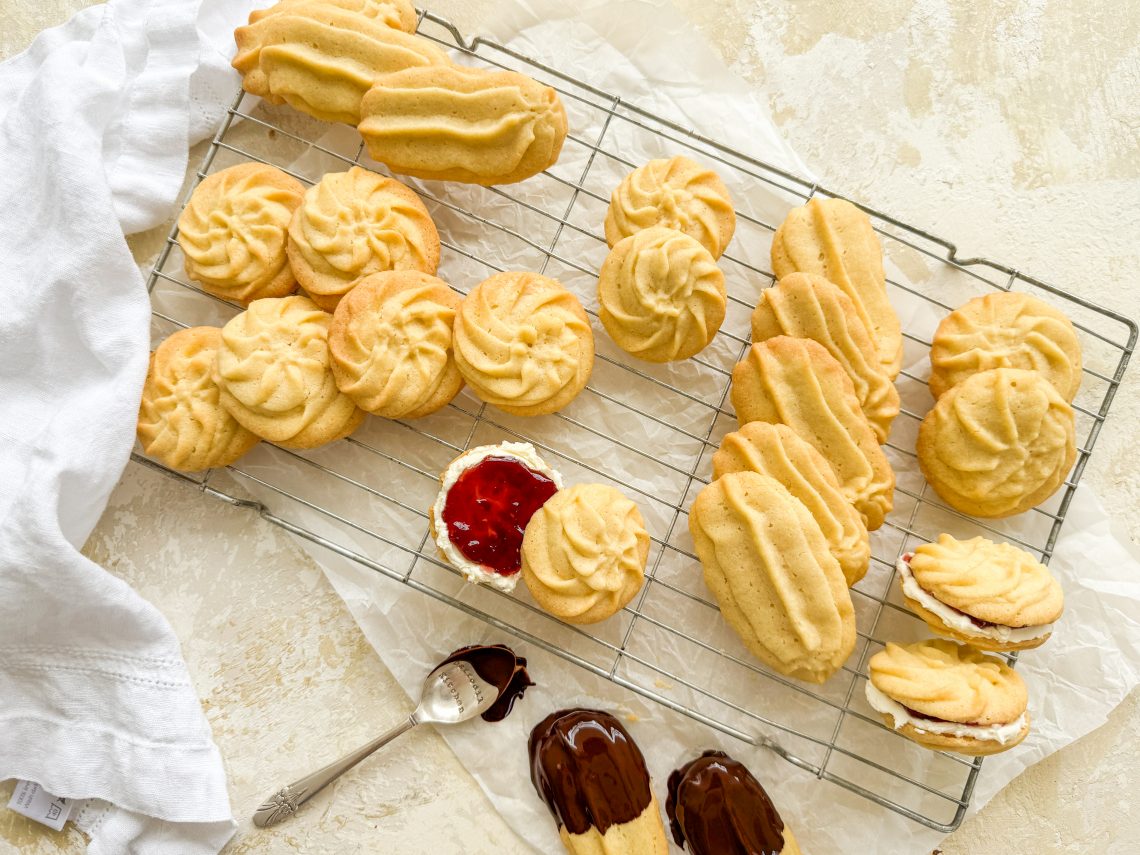
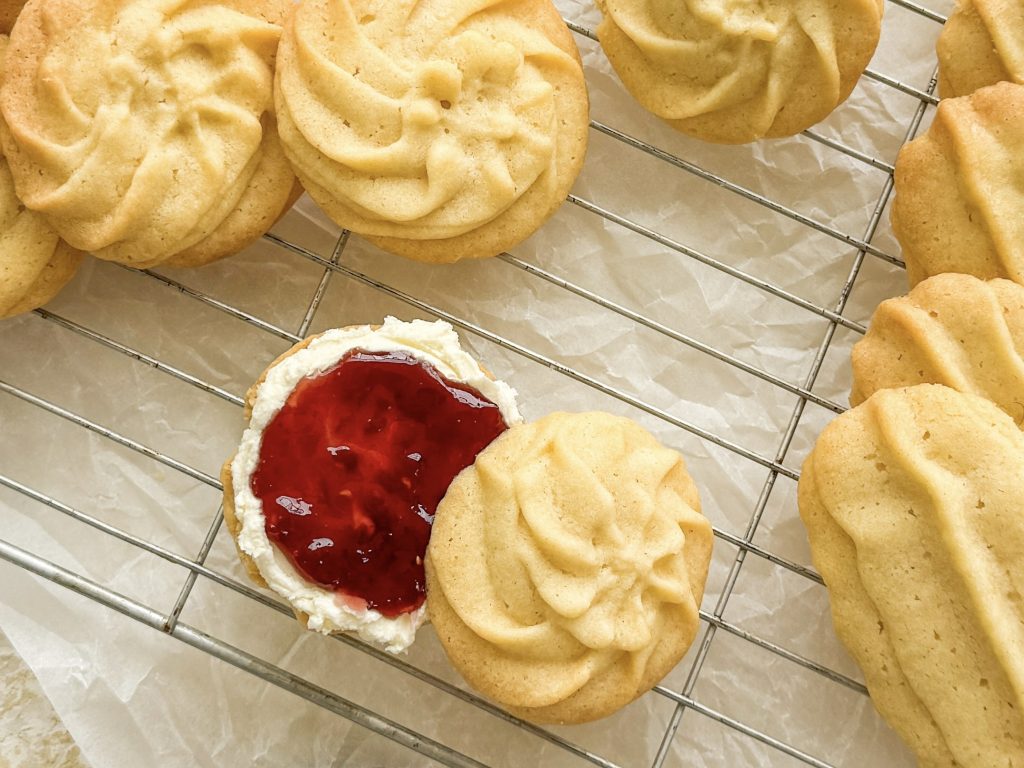
Viennese biscuits, also known as Viennese Swirls or Viennese Fingers, are an absolute classic in the UK and need very little introduction. These delicate treats have a light, tender, crumbly texture and literally melt in the mouth. They can be served simply, as they are, but the swirls are also wonderful sandwiched with buttercream and jam or the fingers dipped in chocolate. Ideal with a cup of tea, or why not serve as part of a traditional afternoon tea. They are quick and easy to make and are superior, by far, to any you will find in a packet!
Despite the name, this is a British recipe, apparently inspired by the German and Austrian biscuits Spritzgebäck. The recipes are very similar and both are loaded with butter, but the main difference is that most Spritz recipes also include egg.
Where is this recipe from?
This is a Mary Berry recipe. I have made no changes other than to add ¼ teaspoon fine salt to the biscuit dough. Salt is a flavour enhancer and whilst you can’t taste it, it really helps to make the sweet flavours pop. See here for Mary’s recipe which includes a quick raspberry jam recipe as well as a buttercream filling.
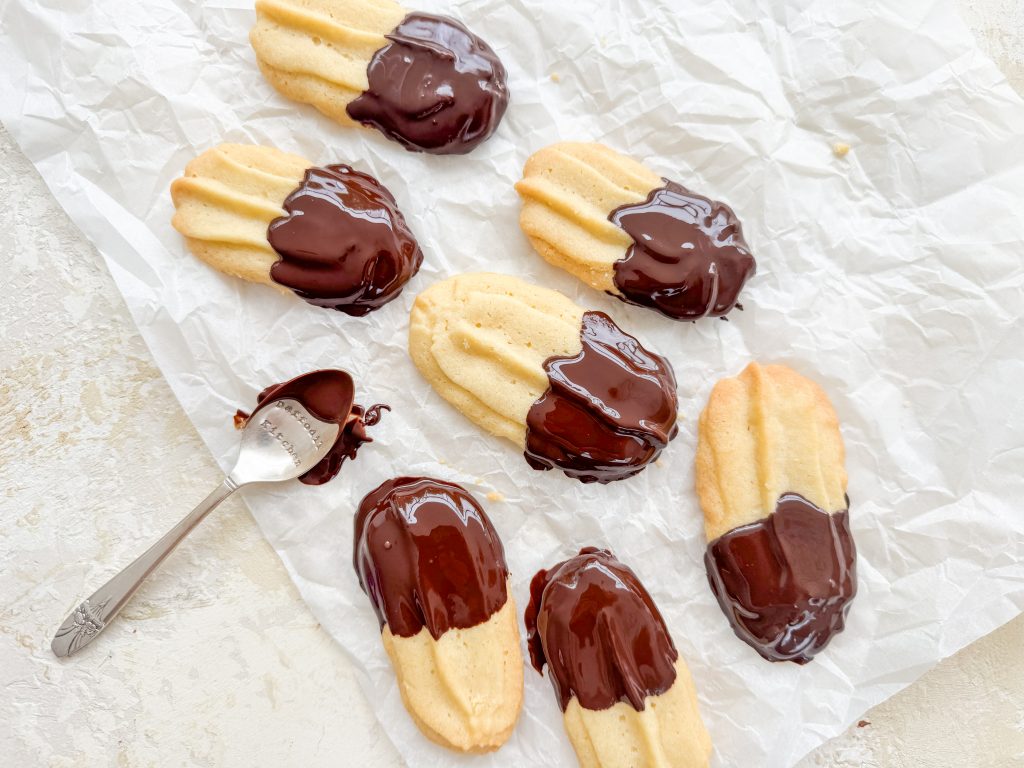
How to make Viennese Biscuits
Please see the printable Recipe Card below for the exact, yet condensed, quantities and instructions.
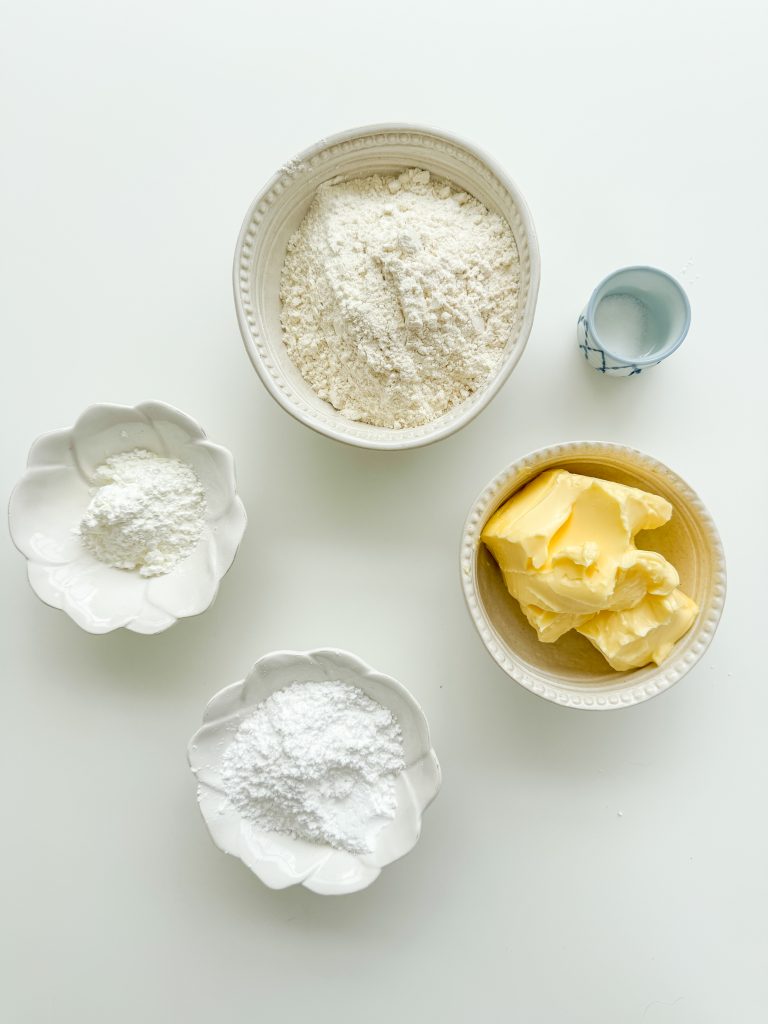
Collect all the ingredients together:
- unsalted butter, very soft. I always use unsalted butter in baking. The salt and moisture levels in salted butter can vary significantly, which affects consistency. Using unsalted butter allows me to control exactly how much salt and liquid goes into a recipe, helping to create cakes and desserts with a better texture and more consistent, creamy flavour. It is important that the butter is very soft because this will help create a biscuit batter that is soft enough to pipe.
- icing sugar. Icing sugar crystals are ultra-fine, this helps them dissolve evenly into the butter, which will result in a delightfully tender, melt-in-the mouth and velvety texture. If necessary, you can replace it with caster sugar but make sure you beat the sugar with the butter for longer to help dissolve the larger crystals.
- plain/all-purpose flour. These biscuits do not need a raising agent so please do not use self-raising flour.
- cornflour/cornstarch. Cornflour is used in Viennese biscuits to help achieve the signature melt-in-the-mouth, crumbly texture and also to help them hold their piped shape in the oven. Cornflour absorbs moisture and expands during baking creating a rigid structural framework that “sets” the shape of the piped swirl or finger much quicker than wheat flour alone.
- fine salt. Salt is a flavour enhancer. Whilst you can’t taste the salt, and you only need a small amount, it is an important ingredient in baking as it really helps to make the sweet flavours pop, It balances the sweetness, cuts through the richness elevating and generally elevates the taste of any baked product.
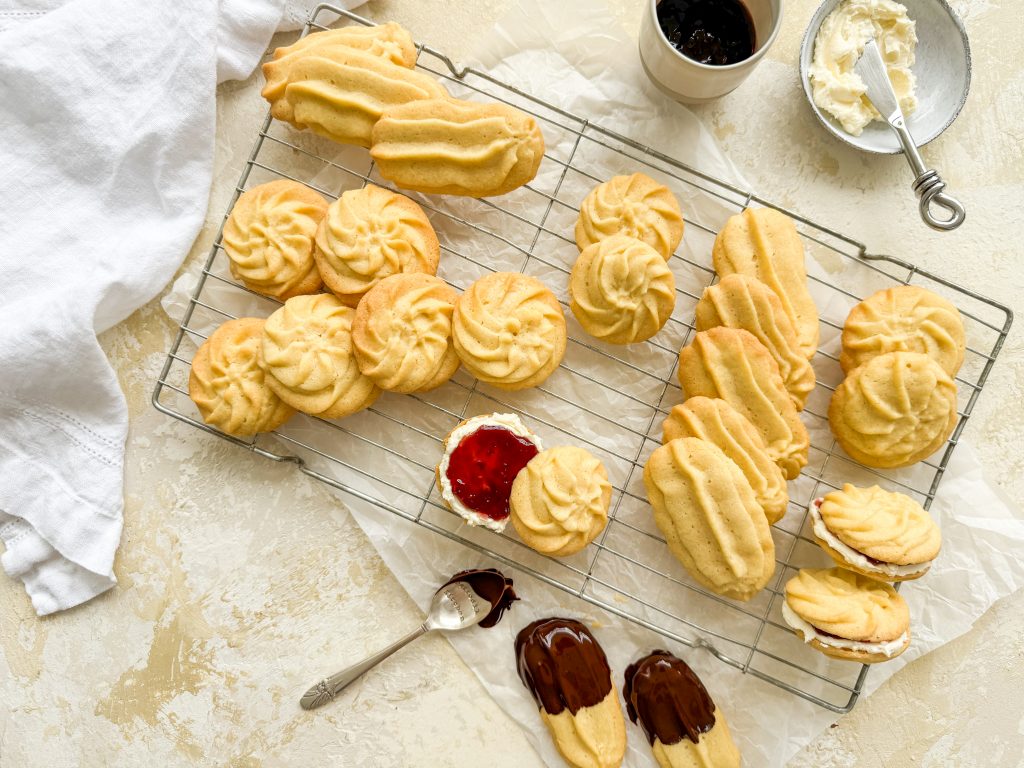
Now let’s make these wonderful, melt in the mouth biscuits:
- Decide what size and shape you want to make your biscuits. The pictures below show 5cm/2in round biscuits, 4cm/1½in round biscuits and 6½cm/2½in long biscuits. Whichever you choose, draw either a circle or a line to your desired size on your baking parchment. Using pastry cutters as a measure is ideal. Draw them at least 4cm/1½in apart to allow for the biscuits to spread when cooked. Turn the baking parchment over so the pencil or ink is on the reverse side.
- Weigh the soft butter and icing sugar in a mixing bowl and beat with an electric mixer until it is very light and fluffy. This will take between 2 – 4 minutes. You may need to scrape down the sides of the bowl to ensure even mixing of the butter and sugar.
- Add the flour, cornflour and salt and beat into the butter mixture on a slow speed. Turn off as soon as it is virtually completely mixed in and finish by hand. Alternatively fold it in completely by hand. Be careful not to over-mix.
- Transfer to a piping bag fitted with a star nozzle. Ideally use a 10mm – 15mm size. The easiest way to do this is to open up the bag inside a measuring jug or large glass tumbler and then transfer the biscuit dough tot he bag.
- Carefully pipe onto your baking parchment, keeping within the circle lines. Start on the outer edge and work inwards.
- Refrigerate for at least 30 minutes. This helps the biscuits maintain their shape. If you do not have time, don’t worry, but your biscuits will spread a little more.
- When you are ready to bake the biscuits, preheat the oven 190°C/375°F/Gas 5 (fan 170°C).
- Bake the biscuits for 12 – 15 minutes or until lightly golden around the edges. How long they take to cook will depend on your oven and the size of the biscuits. Leave on the trays for 10 minutes and then transfer to a wire rack to cool.
Ingredients 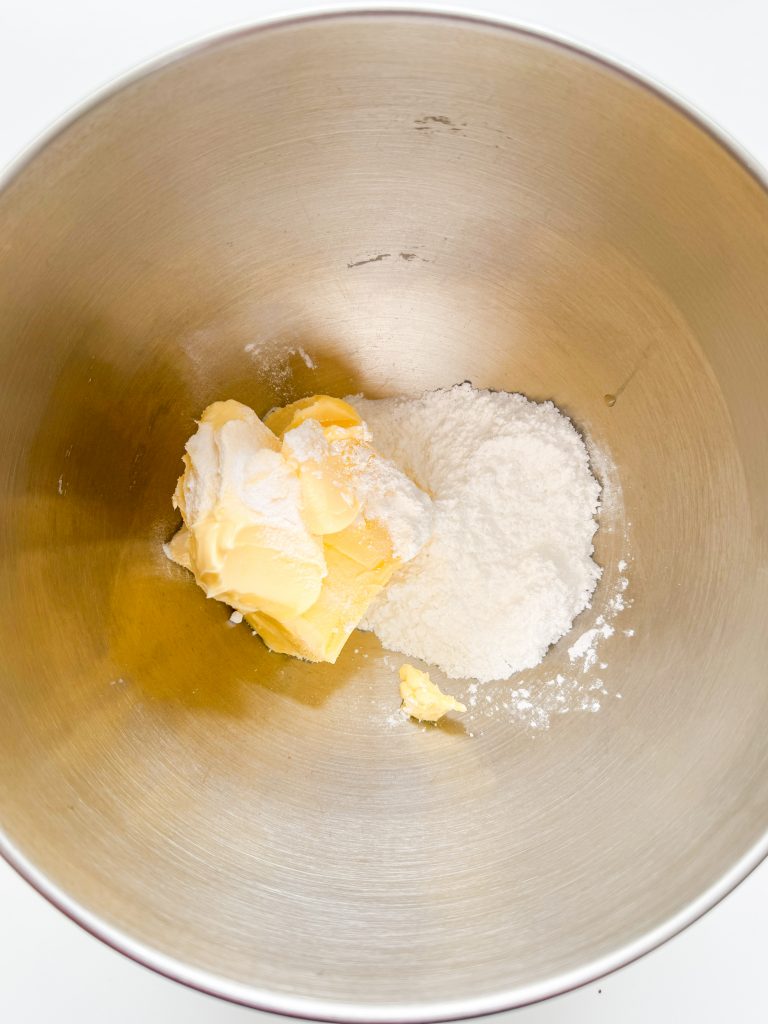
2 Butter, sugar 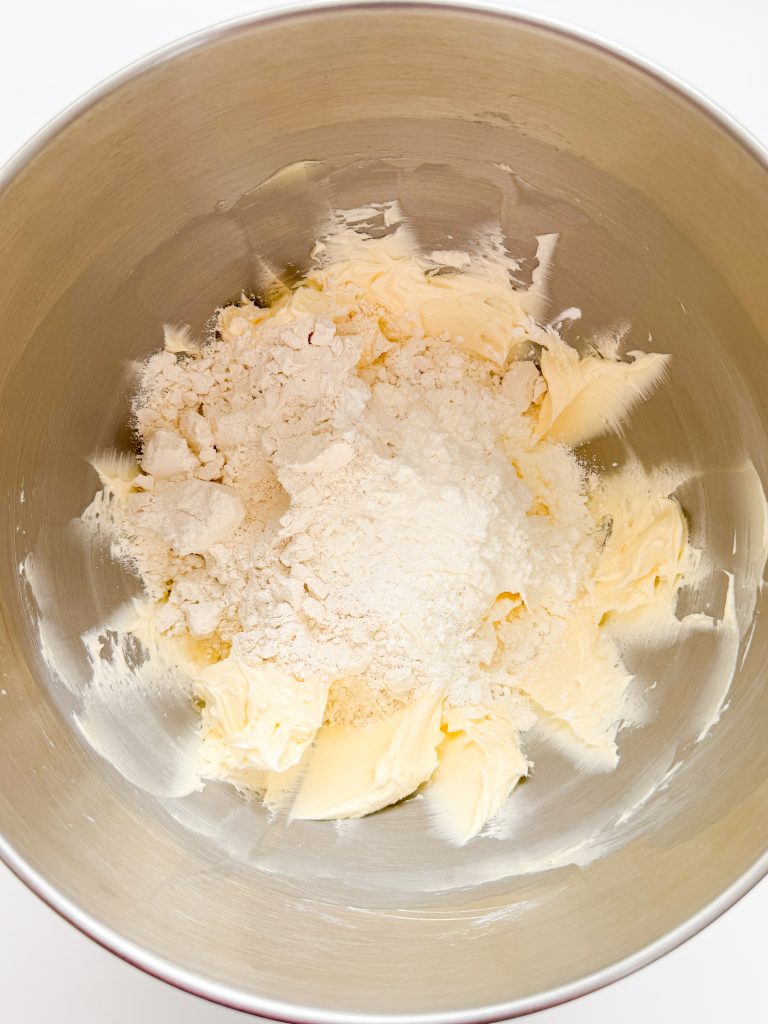
3 Flour, cornflour, salt 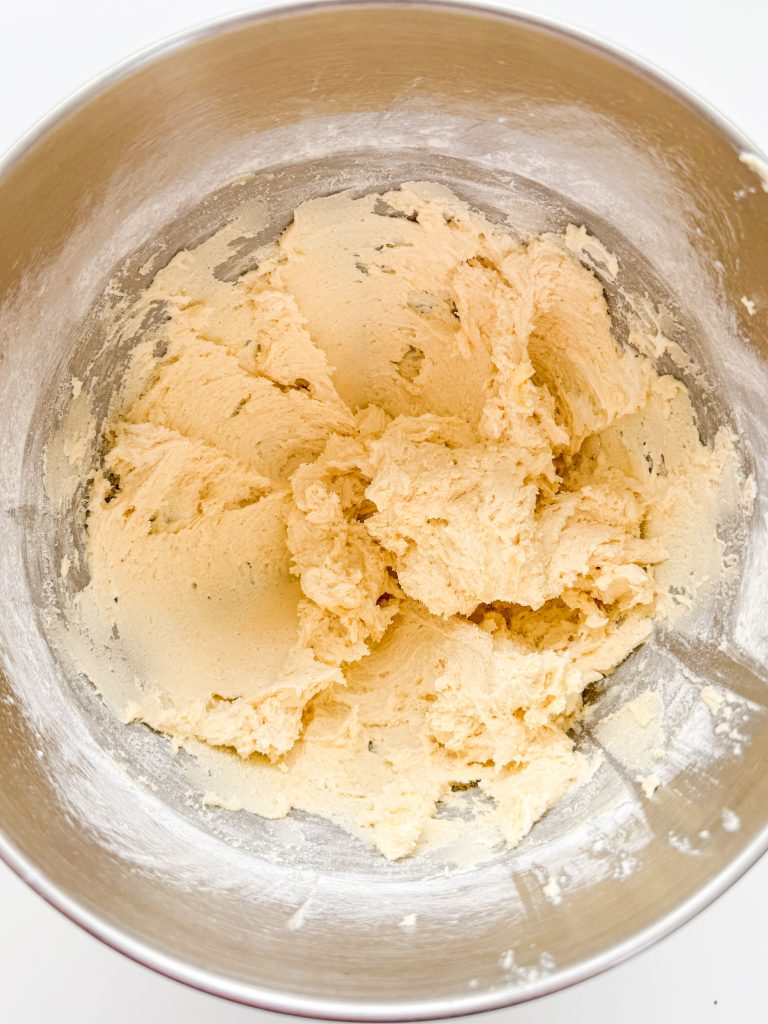
Beat 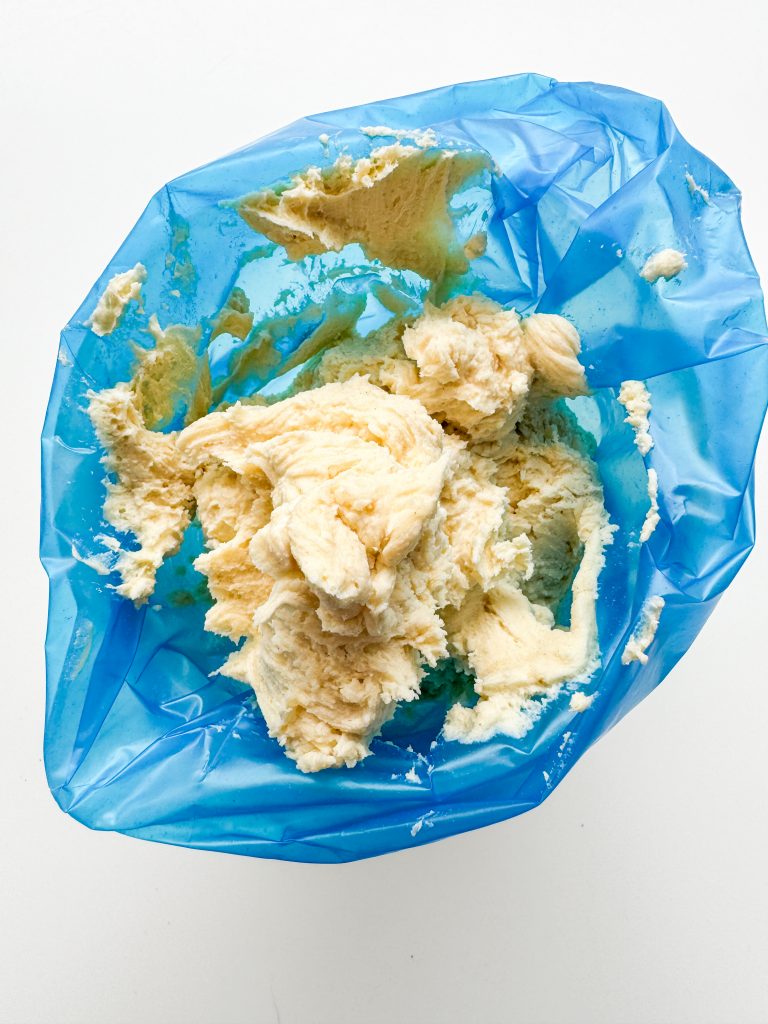
4 Piping bag 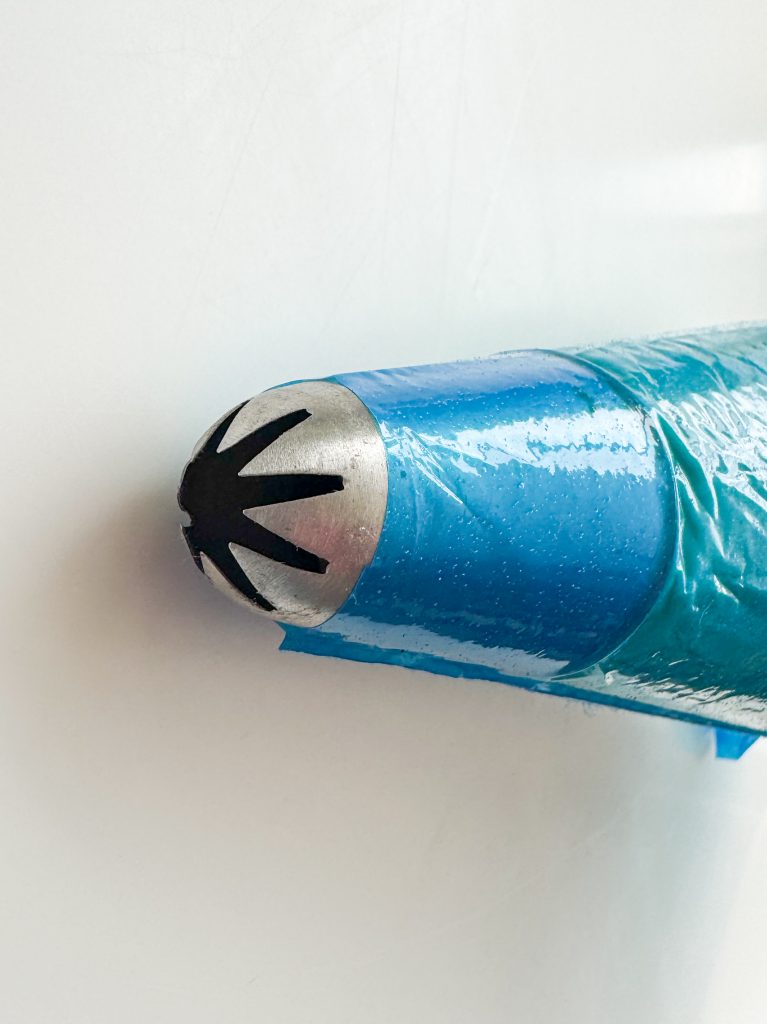
Nozzle 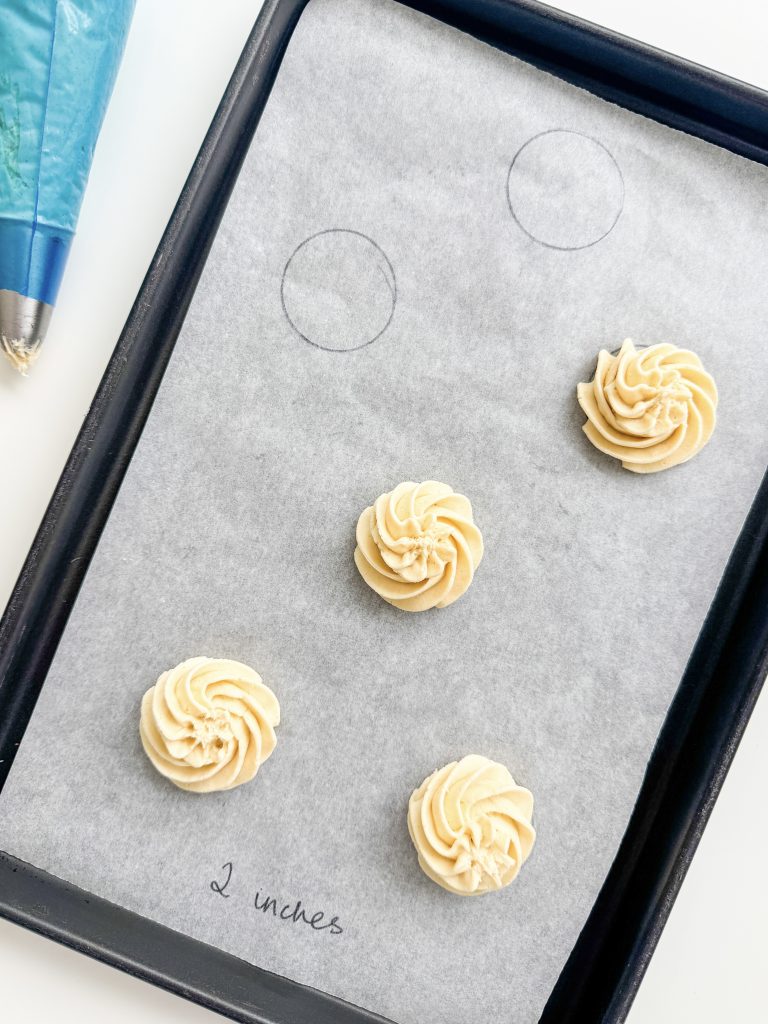
5 – 2 in circles 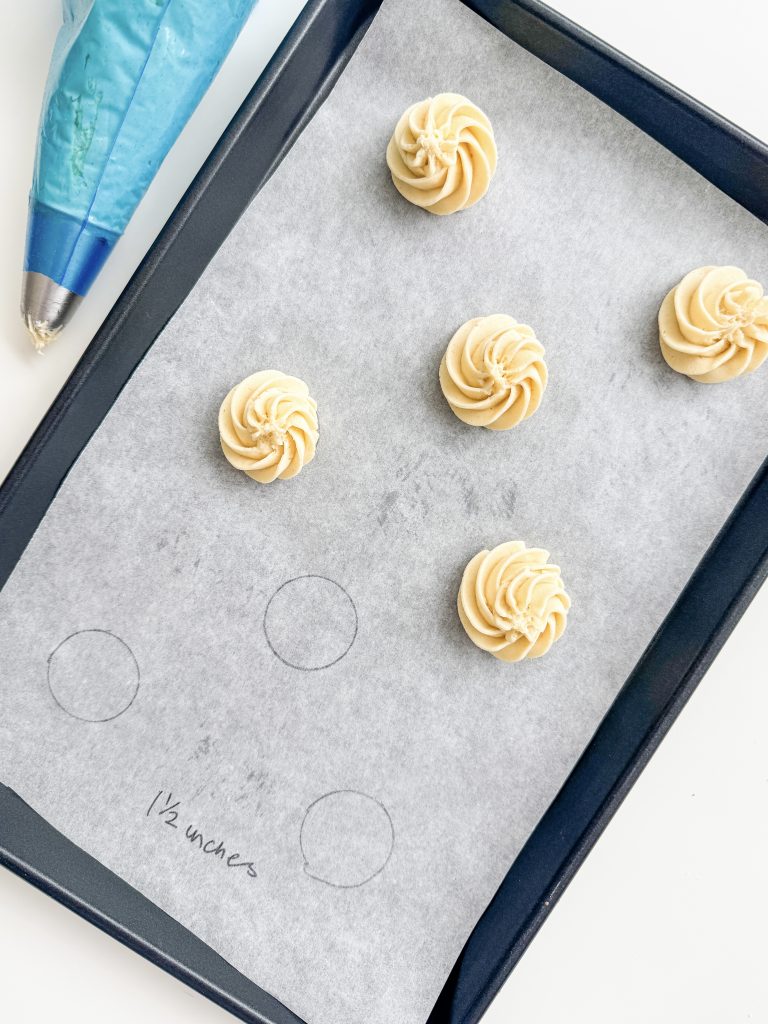
1½ in circles 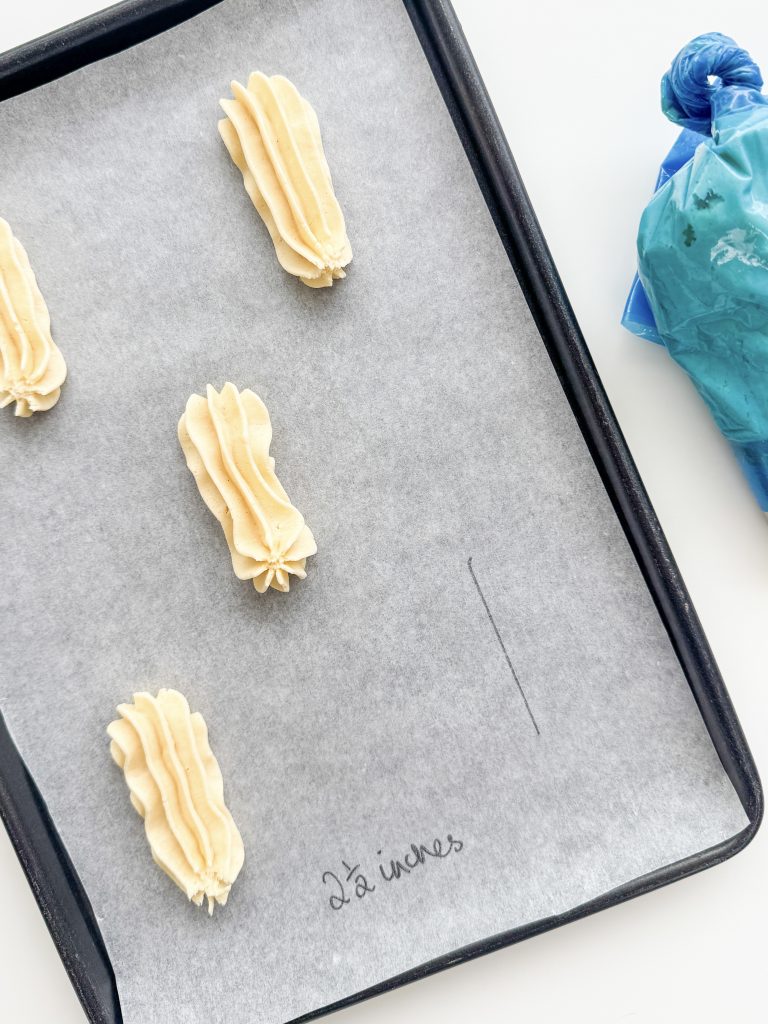
2½ in fingers 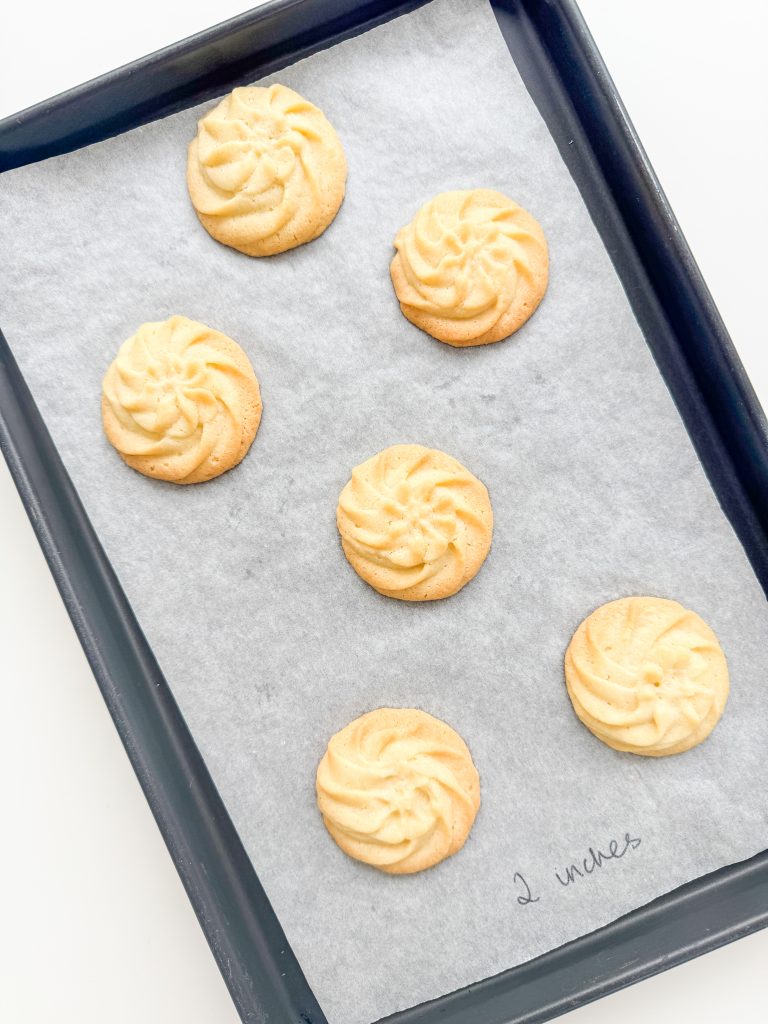
8 Baked 2in 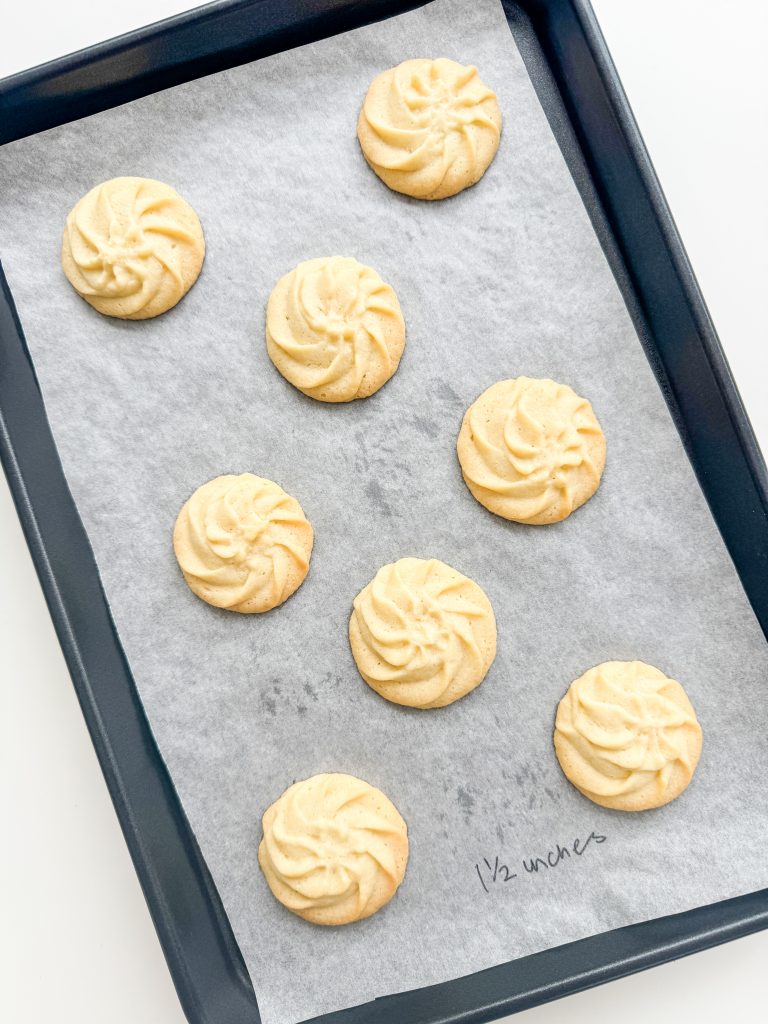
Baked 1½ in 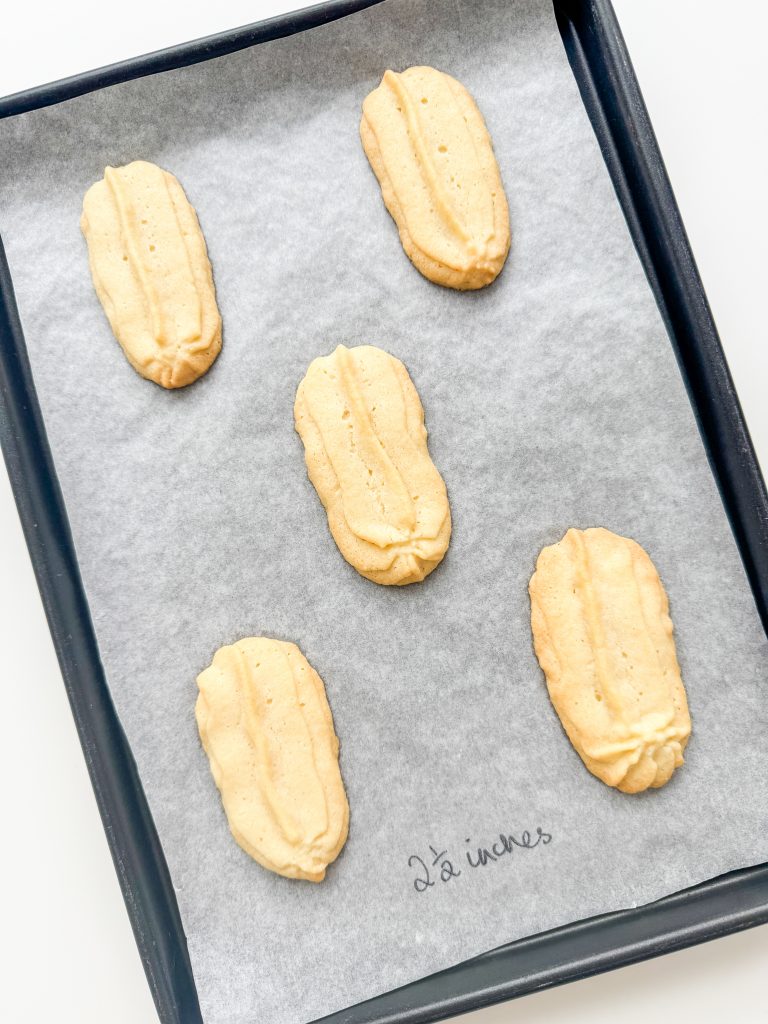
Baked 2½ in 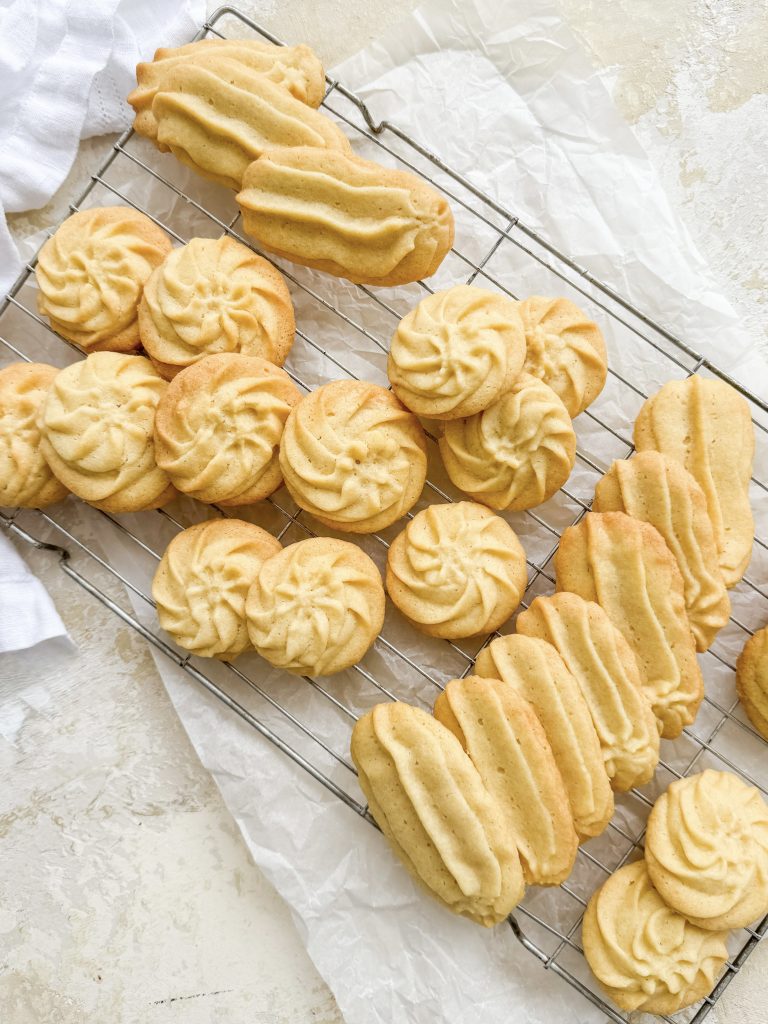
Cool
Made this recipe?
If you make this recipe, do please tag me on instagram @daffodil_kitchen. You could also leave a comment in the box directly below the recipe.
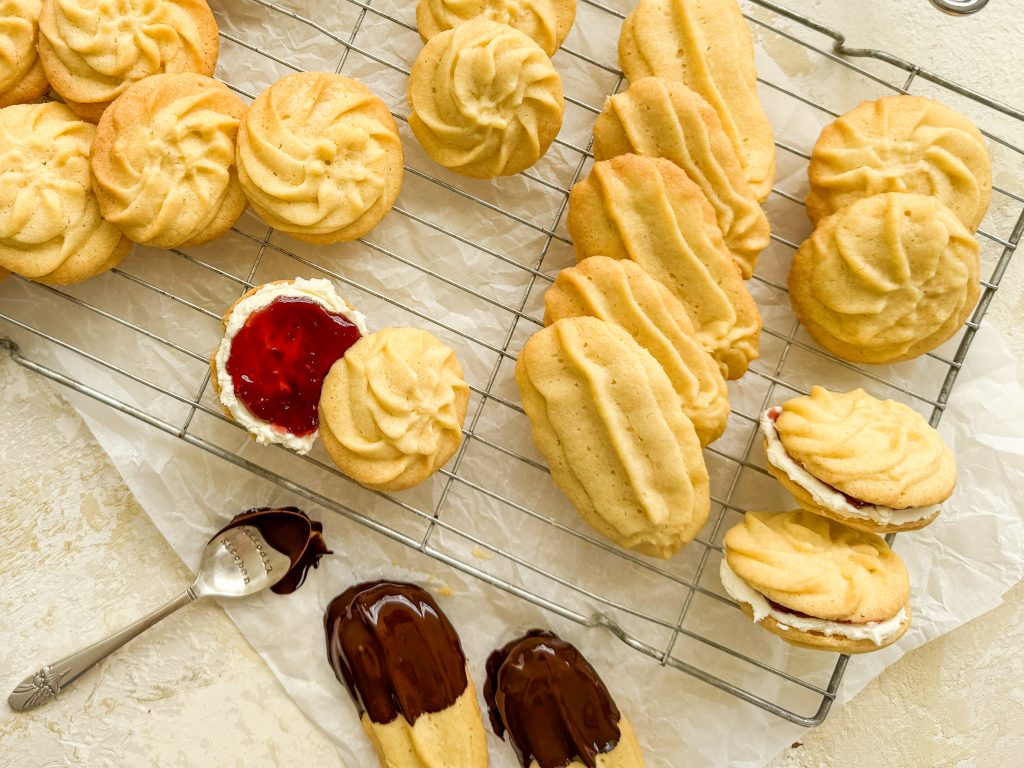

Viennese Biscuits
Viennese biscuits, also known as Viennese Swirls or Viennese Fingers, are an absolute classic in the UK and need very little introduction. These delicate treats have a light, tender, crumbly texture and literally melt in the mouth. They can be served simply, as they are, but the swirls are also wonderful sandwiched with buttercream and jam or the fingers dipped in chocolate. Ideal with a cup of tea, or why not serve as part of a traditional afternoon tea. They are quick and easy to make and are superior, by far, to any you will find in a packet!
Makes 20 – 30 depending on size
Ingredients
- 250g unsalted butter, very soft.
- 50g icing sugar
- 225g plain/all-purpose flour
- 25g cornflour/cornstarch
- ¼ teaspoon fine salt
Instructions
-
Collect together your equipment (see Recipe Notes below) and ingredients. You will need 2 x baking trays, lined with baking parchment.
-
NB The number of biscuits you make will depend on the size you choose to make them. In this batch I made 8 x 2in round biscuits, 8 x 1½ in round biscuits and 10 x 2½ in finger biscuits.
-
Decide what size and shape you want to make your biscuits. Standard sizes are 5cm/2in round biscuits, 4cm/1½in round biscuits and 6½cm/2½in long biscuits. Draw either a circle or a line to your desired size on your baking parchment making sure that they are at least 4cm/1½in apart to allow for the biscuits to spread when cooked. Turn the baking parchment over so the pencil or ink is on the reverse side.
-
Weigh the soft butter and icing sugar in a mixing bowl and beat with an electric mixer until it is very light and fluffy, 2 – 4 minutes.
-
Add the flour, cornflour and salt and beat into the butter mixture on a slow speed. Turn off as soon as it is virtually completely mixed and finish by hand. Alternatively, fold it in completely by hand. Be careful not to over-mix.
-
Transfer the biscuit dough to a piping bag fitted with a star nozzle. Ideally use a 10mm – 15mm size.
-
Carefully pipe onto your baking parchment, keeping within the circle lines. Start on the outer edge and work inwards.
-
Refrigerate for at least 30 minutes before cooking.
-
Preheat the oven 190°C/375°F/Gas 5 (fan 170°C) and bake the biscuits for 12 – 15 minutes, or until lightly golden around the edges. Leave on the trays for 10 minutes and then transfer to a wire rack to cool.
-
NB If dipping in chocolate or sandwiching with buttercream and jam, make sure they have cooled before finishing.
Recipe Notes
Equipment:
- kitchen scales and measuring spoons
- electric whisk and mixing bowl
- piping bag with star nozzle and a jug or tumble
- 2 x baking trays covered in baking parchment
More details on ingredients and instructions:
Please see the ingredient list and the instructions in the post above, for further information.
Butter:
I always use unsalted butter in baking. The salt and moisture levels in salted butter can vary significantly, which affects consistency. Using unsalted butter allows me to control exactly how much salt and liquid goes into a recipe, helping to create cakes and desserts with a better texture and more consistent, creamy flavour. It is important that the butter is very soft because this will help create a biscuit batter that is soft enough to pipe.
Icing sugar:
Icing sugar crystals are ultra-fine, this helps them dissolve evenly into the butter, which will result in a delightfully tender, melt-in-the mouth and velvety texture. If necessary, you can replace it with caster sugar but make sure you beat the sugar with the butter for longer to help dissolve the larger crystals.
Plain flour:
These biscuits do not need a raising agent so please do not use self-raising flour.
Cornflour:
Cornflour is used in Viennese biscuits to help achieve the signature melt-in-the-mouth, crumbly texture and also to help them hold their piped shape in the oven. Cornflour absorbs moisture and expands during baking creating a rigid structural framework that “sets” the shape of the piped swirl or finger much quicker than wheat flour alone.
Where is this recipe from?
This is a Mary Berry recipe. I have made no changes other than to add ¼ teaspoon fine salt to the biscuit dough. Salt is a flavour enhancer and whilst you can’t taste it, it really helps to make the sweet flavours pop. See here for Mary’s recipe which includes a quick raspberry jam recipe as well as a buttercream filling.


You May Also Like
Plum Crumble with Vanilla
Coconut, Chocolate and Nut Slice